

Instructor in the
IXD department
Claudia Dallendoerfer
Antonio Borja
MENTORS
Instructor in the
IND department
TEAM VENTUREX




UX Designer
RHEA PILLAI
UX Designer
ANARA ALAPAEVA
Industrial Designer
WALTER YEUNG
Architectural Designer
VALENTINA BRITO
Meet - Mateo Valtierra, 29
Exotic Adventurer, Content Creater, Adrenaline Junkie
Born into an adventurous family in Chile, Mateo became dedicated to exploring the world's most dangerous, unexplored regions.
He thrives on solo expeditions, staying off the grid for weeks, documenting survival techniques and pushing human endurance.
Pain Points :
- Failure to adapt could leave him stranded without repair access.
- Lack of reliable energy may halt expeditions or force route changes.
- Malfunctioning features could limit his ability to complete tasks or gather footage.
- A disconnect between eco-design and high-tech features could reduce satisfaction with the vehicle's sustainability.
- Insufficient comfort could lead to exhaustion, limiting expedition time.
Global Expedition Leader & Adventure Documentary Filmmaker
"Mateo is a storyteller, every journey is a narrative, every shot a message, driving purpose into every mile."


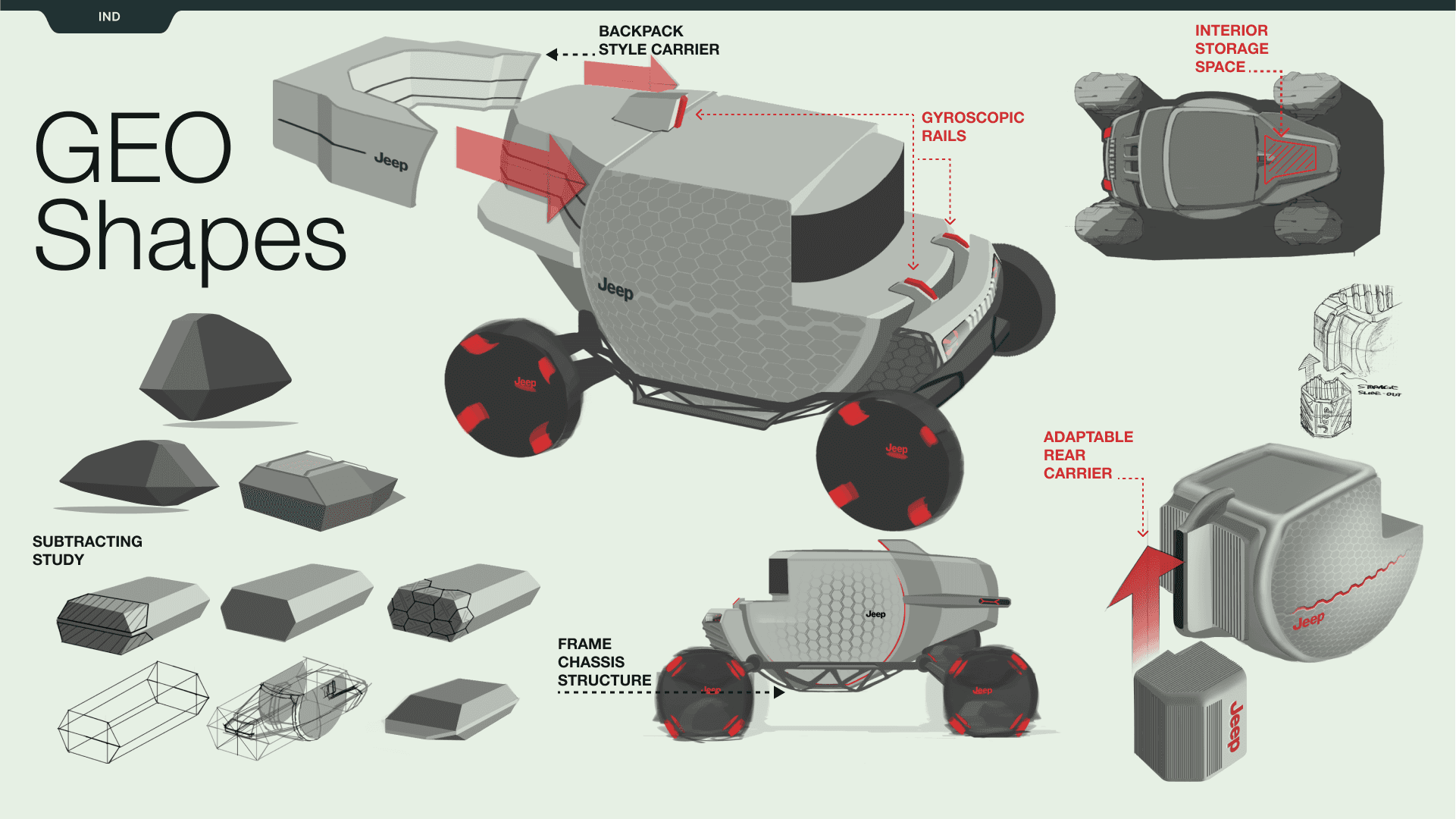
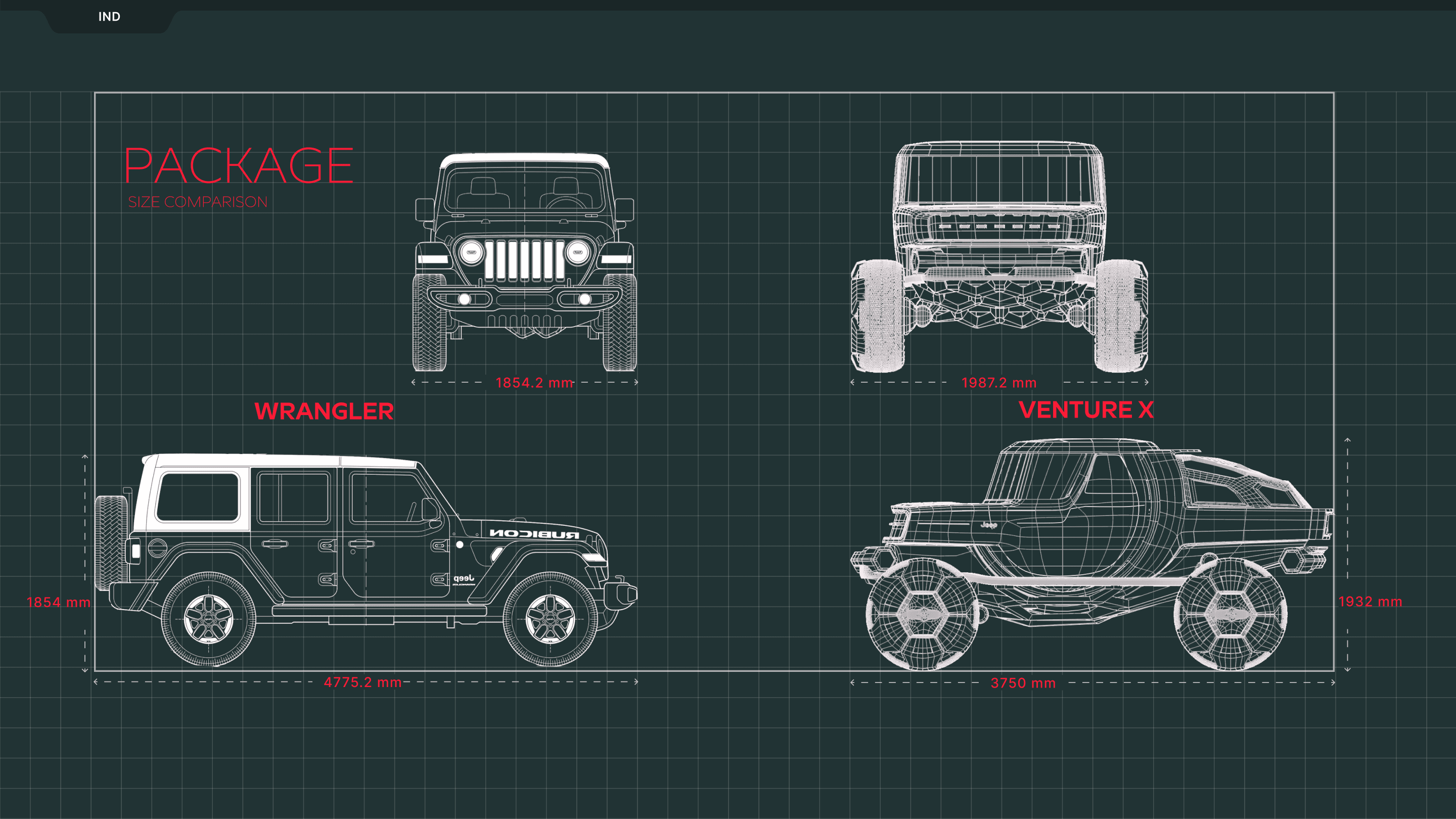
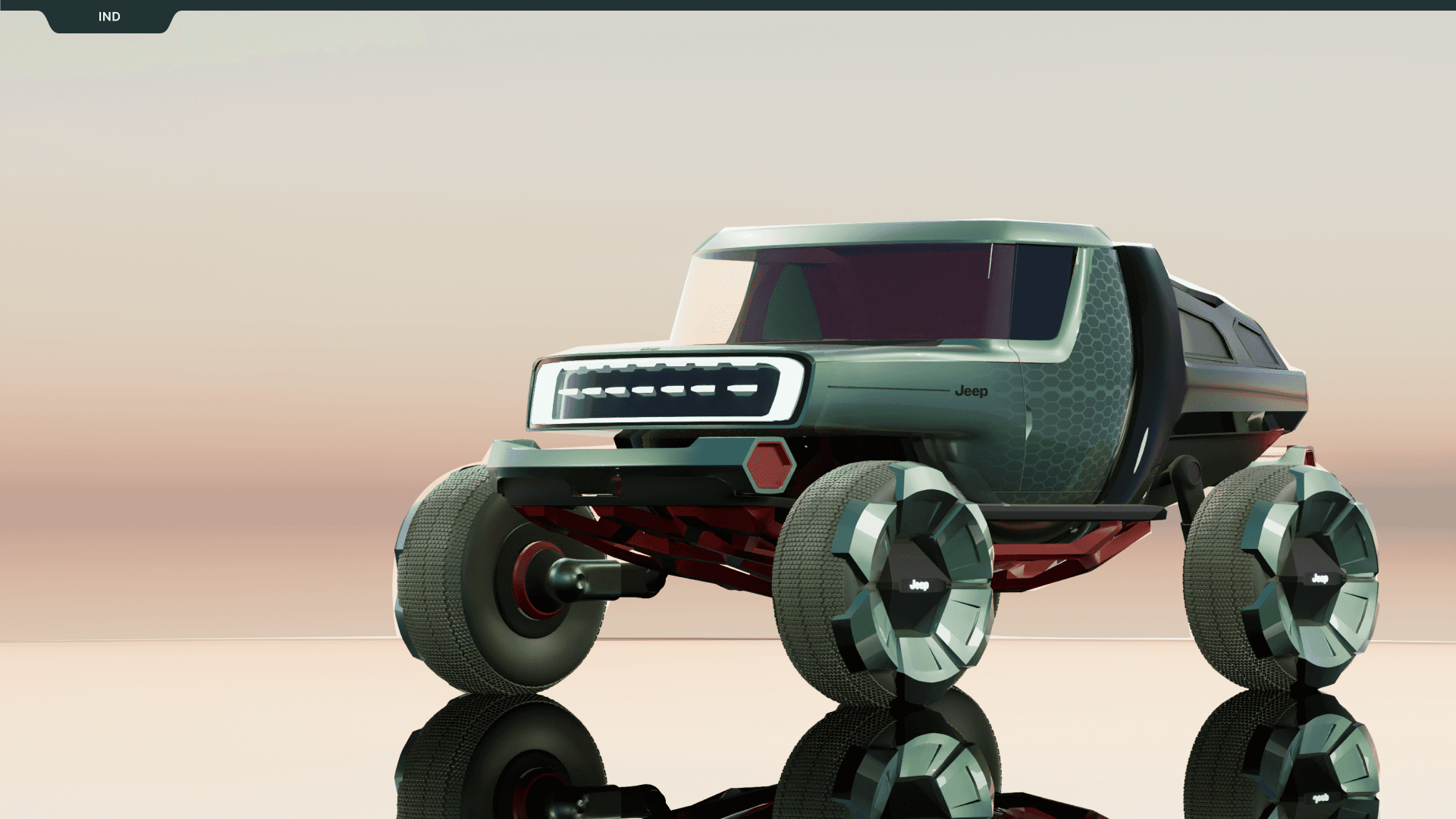
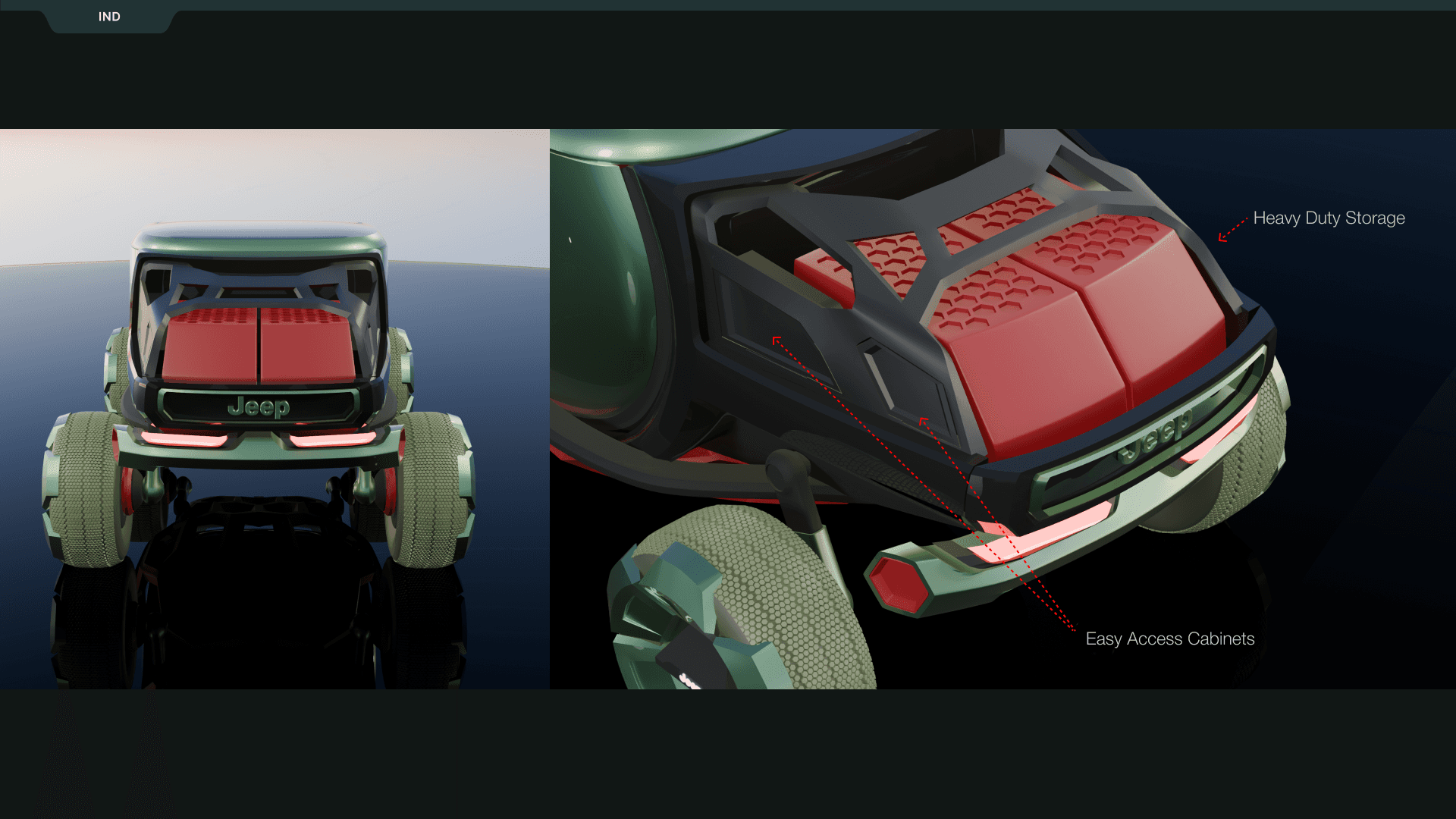
VENTUREX
JEEP CORPORATE SPONSORED PROJECT x AAU
B2C Mobile · Health & Wellness · Accessibility

ROLE
UX DESIGNER
DURATION
January - May 2023
TOOLS
Figma, MidJourney
& ChatGPT
Overview
By 2050, the Jeep will transcend limits, powered by sustainable energy and self-healing materials to conquer extreme terrains without a trace. Advanced AI and augmented reality will redefine exploration, merging technology with nature. Jeep will lead a future of boundless adventure and environmental preservation.
VentureX reimagines off-grid exploration in 2050. The environment it's built for is loud, unpredictable, low-signal, and high-stakes, and most "future car" interfaces answer that by piling on more screens and more data. We went the other way. The interface stays steady, surfaces what matters the moment it matters, then gets out of the way.
My Role: UI/UX Designer & Team Lead – Jeep 2050 (VentureX)
Team Leadership & Project Management: Oversaw the end-to-end process, ensuring seamless collaboration across roles and timely completion of deliverables.
User Research: Conducted interviews and secondary research to understand the evolving mobility needs of future users, especially those in remote and extreme environments.
Persona Development: Created a comprehensive user persona (Mateo Valtierra), including background, goals, frustrations, and behavior, which served as a north star for our design decisions.
Storyboard & Mood Board Creation: Wrote storyboards to communicate user journeys and crafted visual mood boards to reflect the emotional and functional tone of our future-focused experience.
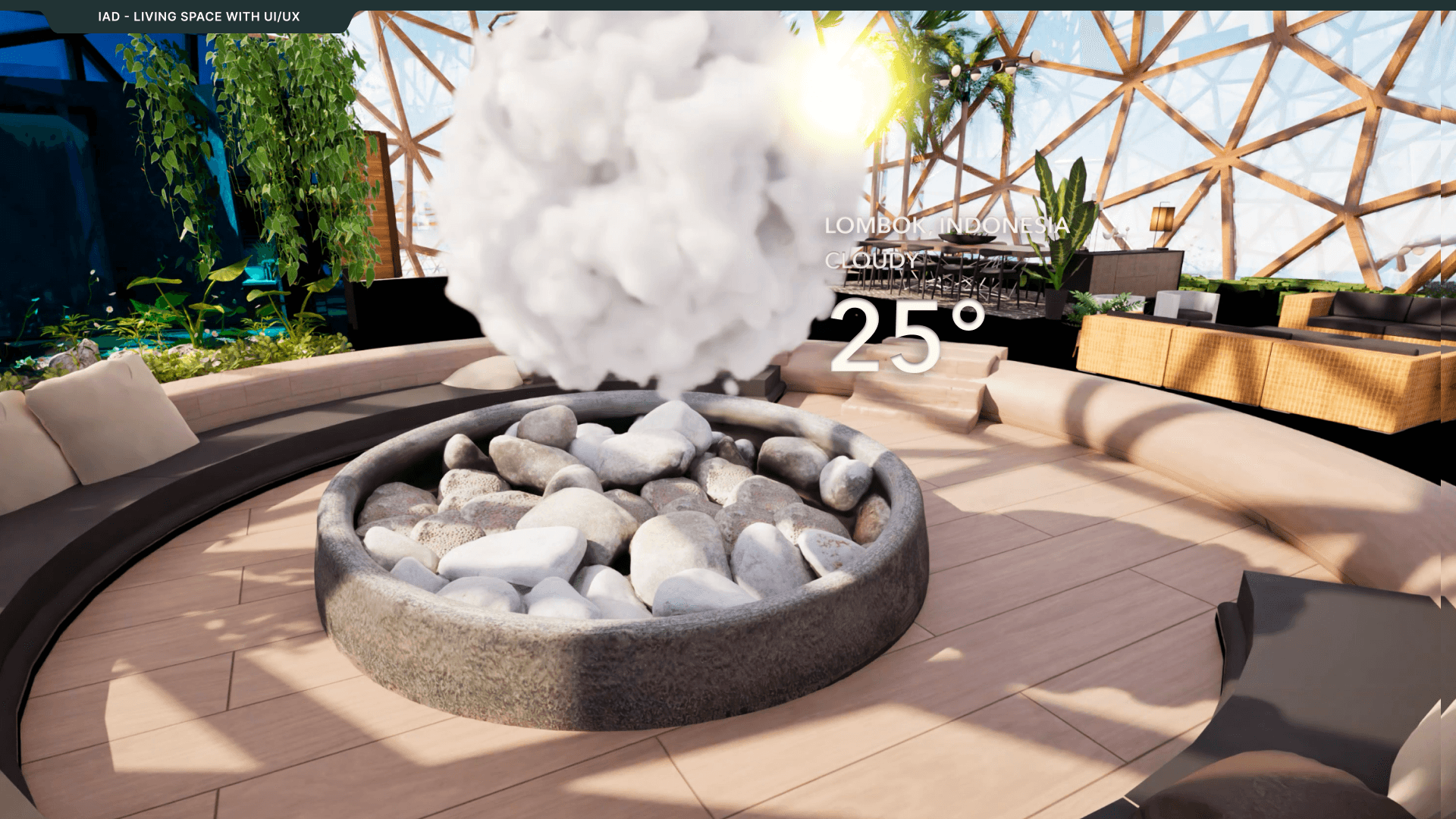
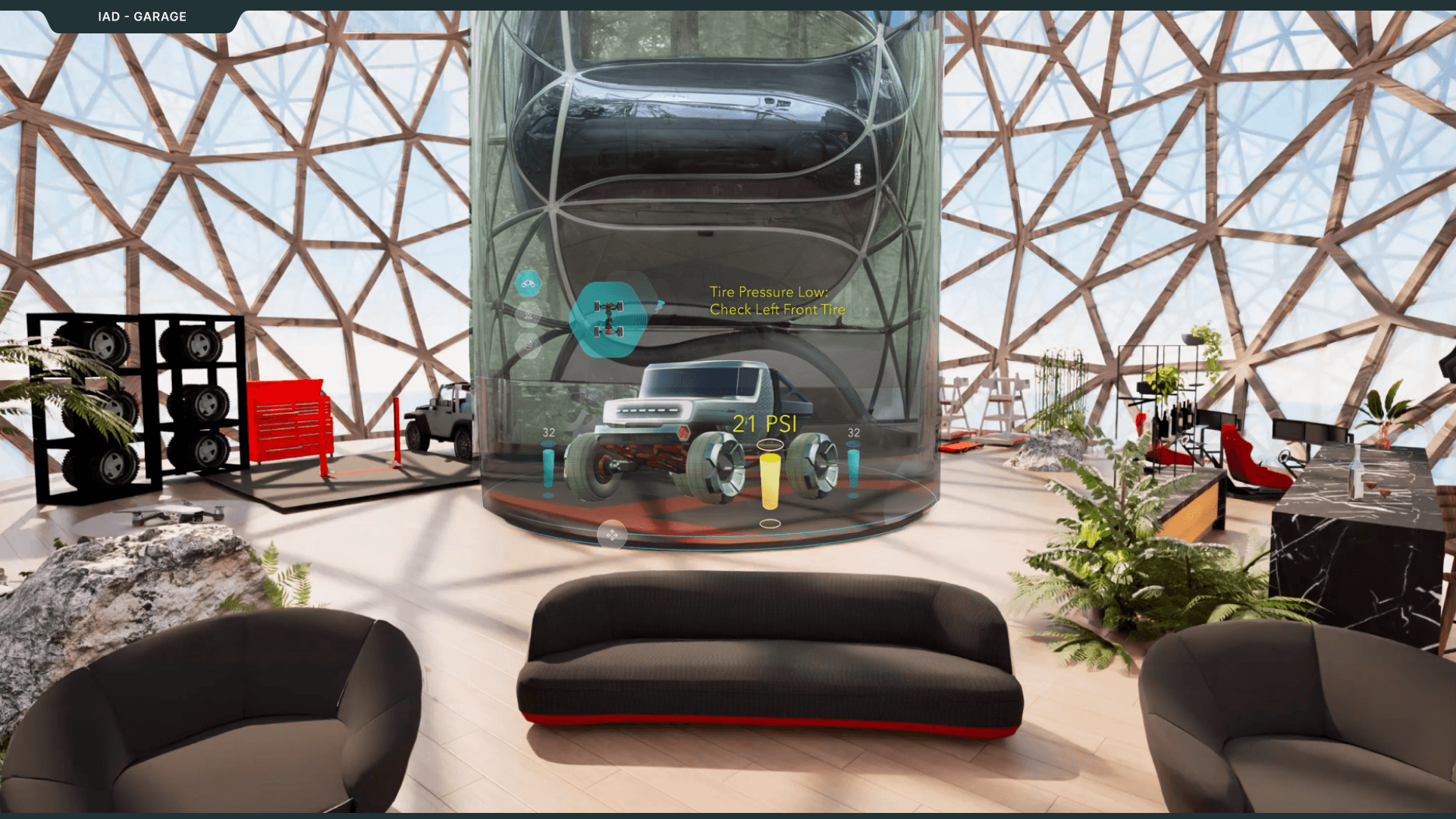
UI/UX Design & Prototyping: Co-designed interactive prototypes of the Jeep’s digital interface and its connected home ecosystem, focusing on intuitive navigation, futuristic features, and accessibility.
Visual Communication: Collaborated on the design and production of our final presentation deck, infographic video, and poster to convey the story, systems, and innovation of our concept.
Collaboration & Co-Creation: Partnered with Anara and the larger team on concept development, iterative feedback sessions, and refinement of all key deliverables including the deck, video, and prototype assets.
During the Jeep 2050 VentureX project, I wore multiple hats; from leading the team to diving deep into the design process. This project was all about imagining the future of mobility, and I was thrilled to contribute both strategically and creatively.
The DESIGN challenge
Exploration is the worst-case environment for an interface. The vehicle is moving over rough ground, the stakes are real, and the last thing a driver should do is bury their eyes in a dashboard. But they still need full information and full control; navigation, terrain, vehicle state, and the ability to act on all of it.
So the question wasn't what can we show? It was the opposite: how little can be on screen at any moment, and how fast can the right thing appear and then disappear? Every concept we designed is an answer to that; keeping the driver informed and in control without ever pulling them out of the world they came to explore.
Let me set the scene;
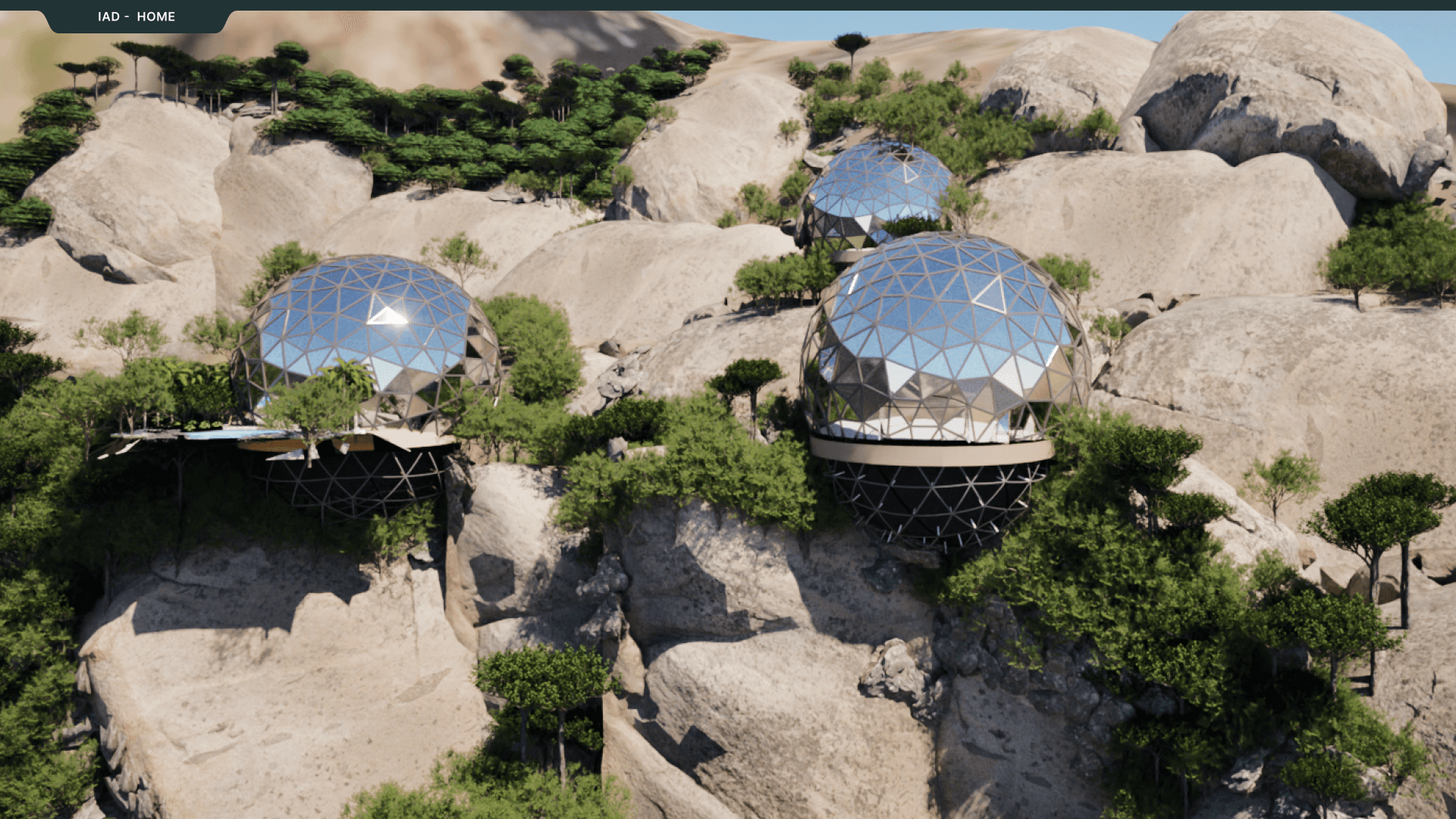
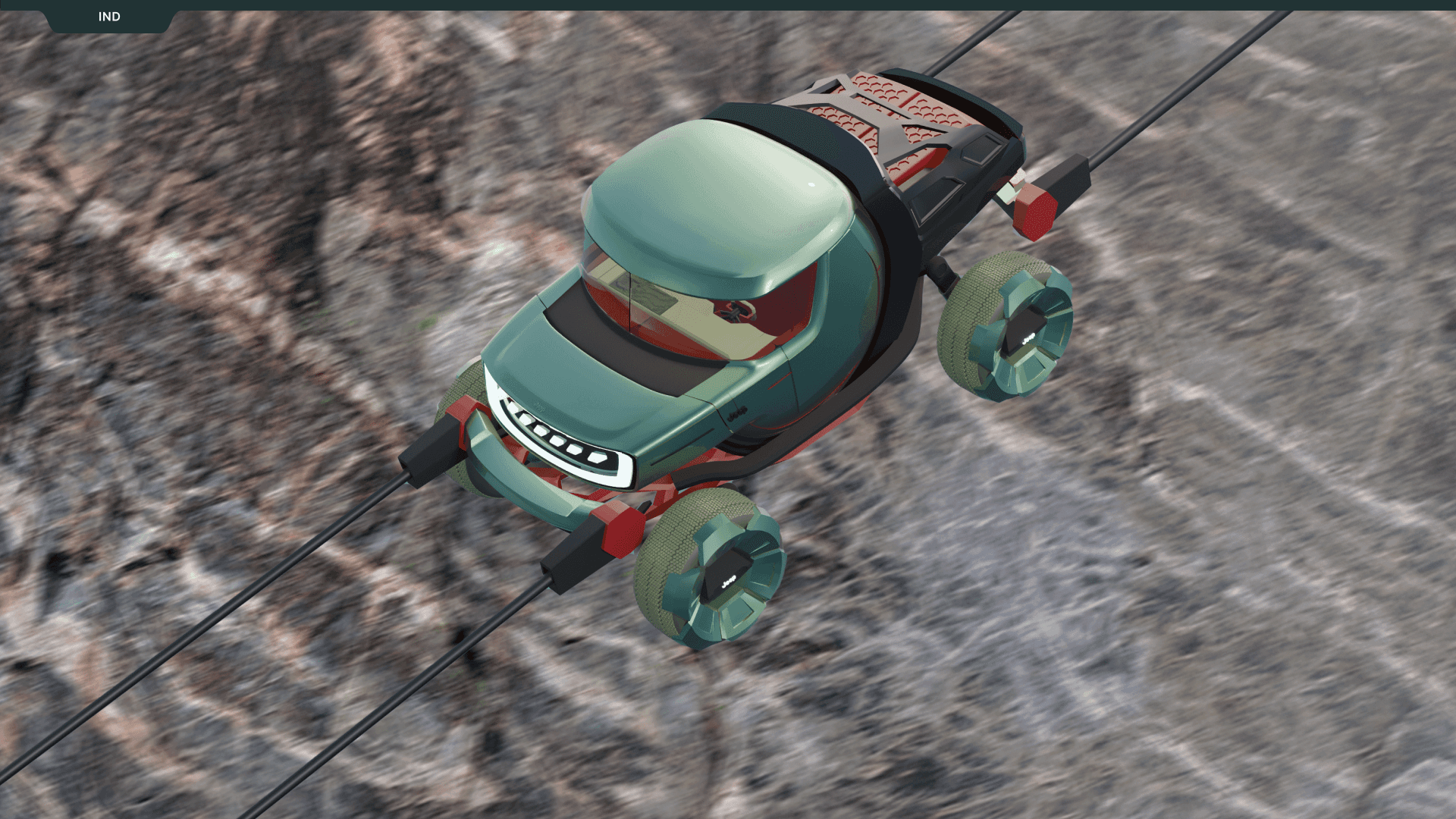
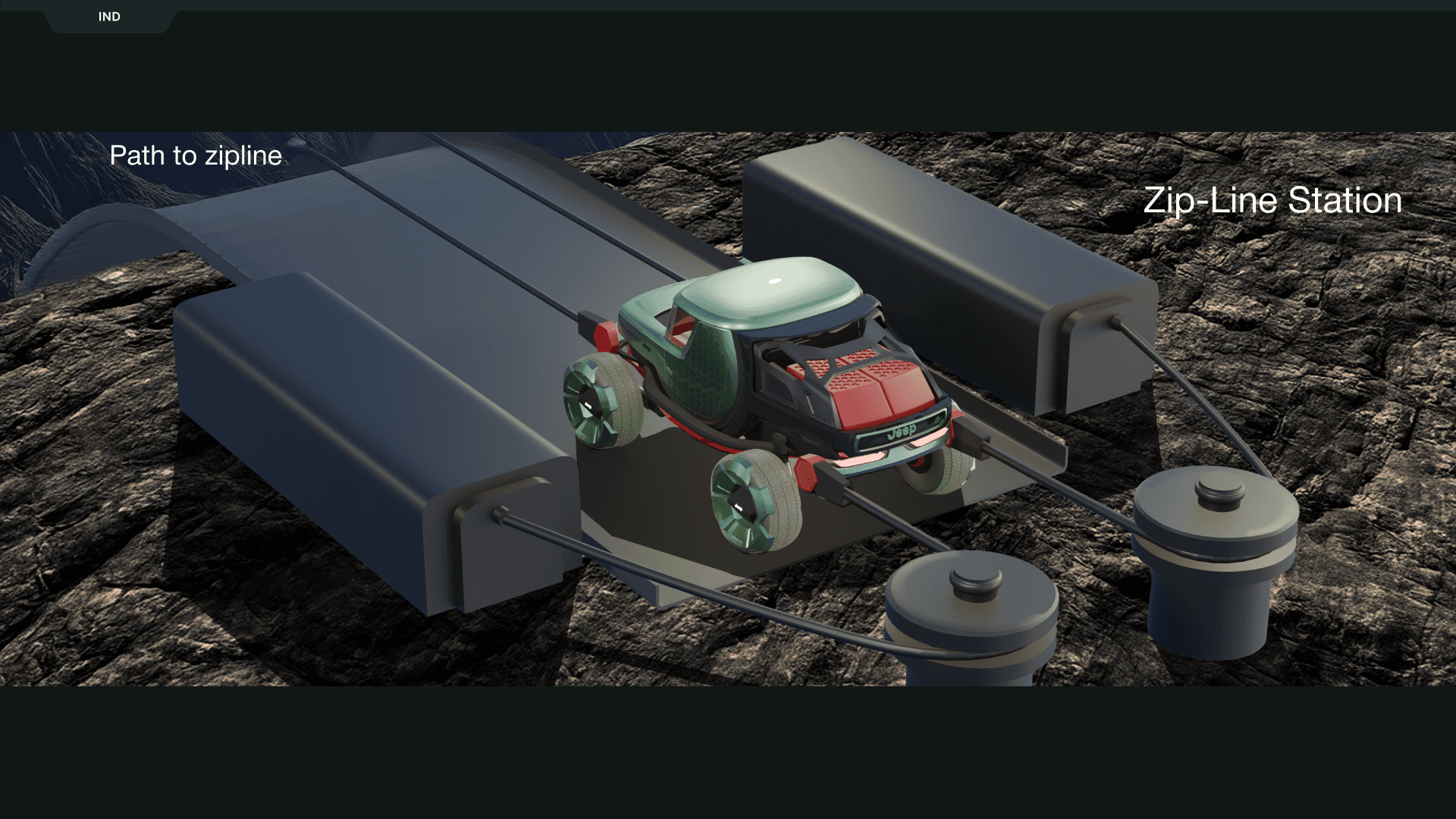
It begins with Intelligent Connection, followed by route setting and autonomous navigation with a 3D holographic display. As the Jeep reaches a scenic yet challenging environment, it adapts to varied terrains like rivers and rocky paths with ease. Features such as aerial drone assistance for filming and real-time health monitoring enhance the experience. In the final moments, the vehicle performs a bold and innovative move—zip-lining down to a cliffside house, seamlessly delivering Mateo to his next adventure base.
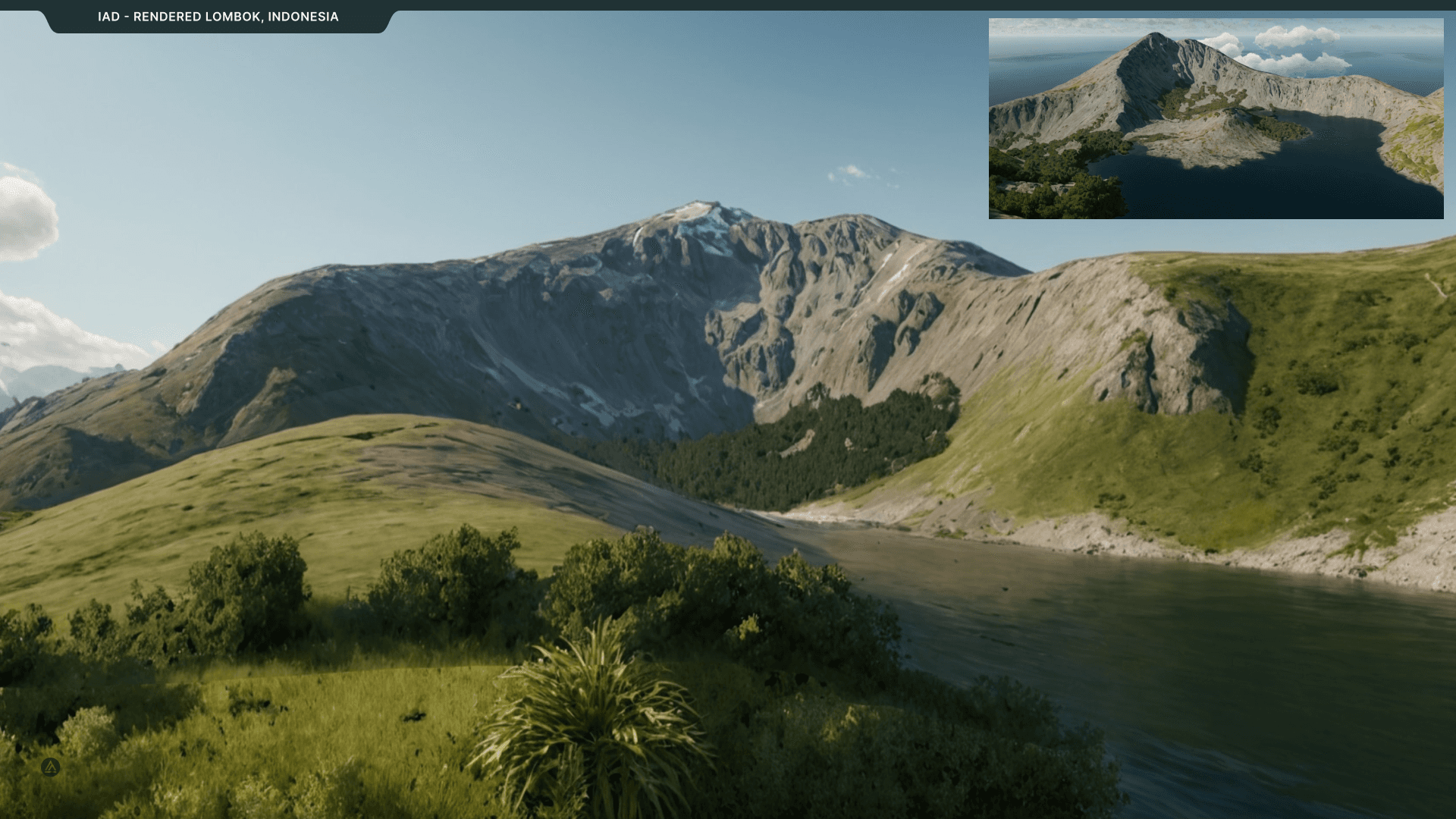
Architecture Spot for Mateo
For Mateo and people like Mateo;
Target Region
We chose Indonesia for its incredible biodiversity, rugged terrains, and remote, untamed ecosystems; making it an ideal setting for future exploration. For Mateo, a solo eco-adventurer and conservation storyteller, Indonesia is the ultimate backdrop; wild, unpredictable, and full of stories waiting to be told.

Built to step back;
Four decisions, each putting far-future technology to work on a single question, how to keep the driver present without getting in the way.
Notifications that retract
Information rises into the driver's line of sight only when it's needed — a turn, an alert, a shift in conditions — and retracts after a few seconds. The windshield's default state is empty, not full. Nothing stays on screen longer than it has a reason to.
Eyes never leave the terrain
The display is gyroscopically stabilized, holding level independent of the chassis so navigation and vehicle data stay legible through the roughest terrain, while control runs through a ring worn on the hand. The radial menu carries no text by design — as the driver scrolls the options, each one is read aloud, so they choose by ear rather than by reading: adjusting suspension for sand, rock, or snow, or confirming navigation with a gesture, hands on the wheel and eyes ahead. Neither reading the interface nor acting on it ever costs the driver a glance down.
Terrain you can read at a glance
The main display renders the route as 3D terrain rather than a flat line, mirroring the landscape ahead in real depth and detail. Elevation, obstacles, and the path read spatially, so a glance at the screen maps straight onto what's outside the window — which matters most off-grid, where there's no marked road and no signal to fall back on.
Holding one vision;
Four people meant four strong, often conflicting visions of what 2050 should look like, and the hardest part of this project wasn't a screen — it was getting everyone to agree on one of them. Leading that meant pushing past our individual ideas of what looked impressive toward a single question we could all design against: what does Matteo actually need?
The easy answer was to hand him more control and more information. The right one was the opposite: an experience that keeps him present in the moment and lets the car carry the rest. Fifty years out, the vehicle is capable enough to make that real, the navigation recedes, the terrain handles itself, and Matteo stays in the experience instead of managing it. Getting four people to agree on that one idea was as much of the design as anything we drew.
What I took from it;
VentureX pushed me past screen design into designing for an environment rather than a device, one where motion, stakes, and the absence of connectivity are the real constraints, not the screen size.
The principle I carried out of it: in a high-stakes environment, restraint is the feature. The strongest interface here is the one that shows up exactly when it's needed and otherwise disappears, leaving the person free to do the thing they came to do.
VentureX, a speculative design project. Jeep × Academy of Art University 2024
© Rhea Pillai. All rights reserved.